USTR’s Forced Labor Investigations:
What Companies Need to Know
Understanding where USTR is heading gives companies time to build the systems that enforcement will expect. Better Trade Collective can help validate these systems.
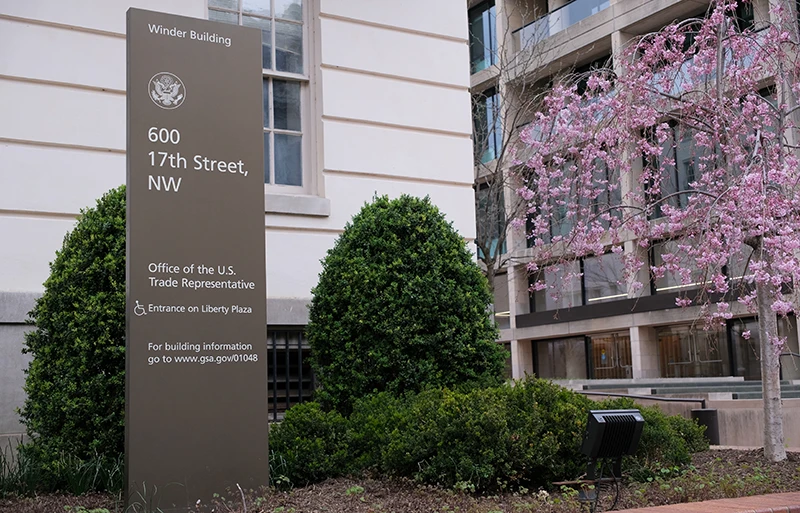
The Office of the U.S. Trade Representative has initiated Section 301 investigations examining whether 60 foreign economies have failed to prohibit the import of goods produced with forced labor. The investigations cover major U.S. trading partners, including China, the EU, India, Vietnam, Bangladesh, Malaysia, and Mexico, and could result in additional tariffs or import restrictions.
For companies with global supply chains, these investigations matter. Here is what to watch.
The question isn’t just whether laws exist. It’s whether enforcement systems work.
USTR is asking whether countries have adopted and effectively enforce forced labor import prohibitions. That framing — “effectively enforce” — is where this gets operationally significant.
A country can have import ban legislation on paper while lacking the customs infrastructure to detain suspect goods, the labor inspection capacity to identify violations in production, or the interagency coordination to act on what it finds. Legislation without those systems is not enforcement. It is paper compliance.
We submitted comments to USTR urging an assessment framework that evaluates operational reality, not just legal formality. The distinction matters because the framework USTR adopts will shape how 60 countries respond, and ultimately how much pressure flows down into global supply chains.
Forced labor is a production problem, not a border problem.
Import bans are a downstream control. Forced labor occurs upstream in the fields, factories, fishing vessels, and mines where goods are made. An assessment framework that focuses only on whether countries have import bans misses where the risk actually is.
Better Trade Collective recommended that USTR incorporate production-side risk into its analysis, using DOL’s existing evidence tools, including the List of Goods Produced by Child Labor or Forced Labor and the annual Findings on the Worst Forms of Child Labor, as a baseline for identifying where risks are most acute and where enforcement systems are weakest. These are tools we helped build. They are the right starting point.
The enforcement bar is moving. Companies should be ahead of it.
The broader enforcement landscape is already heading in one direction. CBP is evaluating operational due diligence, not just policy documents. UFLPA shifts the evidentiary burden to importers for goods with a Xinjiang nexus. EU due diligence and forced labor regulations are raising expectations further for companies selling into European markets.
A Section 301 framework that evaluates whether countries have functional enforcement systems — rather than just ban language — would reinforce this direction and create clearer signals for companies making sourcing decisions.
For companies, the practical implications are the same regardless of how USTR ultimately structures its assessment: supply chain traceability beyond Tier 1, worker-informed due diligence and grievance mechanisms, and remediation systems that can withstand scrutiny under an increasingly coordinated and evidence-driven enforcement environment.
The companies best positioned in this environment are not the ones that have the right policies. They are the ones that can demonstrate their systems actually work.
If you have questions about what these investigations mean for your supply chain or how to assess whether your compliance systems meet the bar, contact us.