
Better Trade Collective Contributes Forced Labor Enforcement Expertise at Michigan Law’s Transnational Law Conference
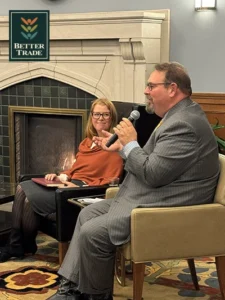 Earlier this month, the Better Trade Collective participated in the University of Michigan Law School’s 2025 Transnational Law Conference: Forced Labor, Trafficking, and Recruitment—Measuring Progress in the Movement for Equitable Supply Chains. The event brought together leading academics, survivor leaders, advocates, and practitioners to examine progress since the adoption of the Trafficking Victims Protection Act and the UN Trafficking in Persons Protocol 25 years ago.
Joined by Alicia Ley of Survivor Alliance, Annick spoke in a fireside conversation moderated by Ambassador Luis C. deBaca (ret.). She discussed how the anti-trafficking movement has evolved—from early, narrow definitions of trafficking to today’s broader recognition of forced labor risks embedded in global supply chains.
Annick emphasized the growing understanding of forced labor in private-sector operations and the need for worker-centered strategies. She highlighted the importance of survivor leadership, worker voice, and moving beyond traditional compliance audits to achieve meaningful and lasting improvements in working conditions.
Marcia moderated a government-focused panel exploring how public institutions can prevent forced labor and improve global recruitment systems. Drawing from decades of leadership at the U.S. Department of Labor’s Office of Child Labor, Forced Labor, and Human Trafficking, she guided a discussion on how policy, enforcement, and recruitment oversight shape safer migration pathways and set clear expectations for businesses. Her experience engaging governments worldwide grounded the conversation in practical implementation and reinforced a central theme: durable change requires coordinated action and accountability structures designed with workers at the center.
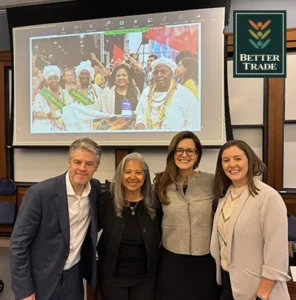 Themes Shaping the Future of Forced Labor Prevention
Speakers throughout the conference examined emerging issues and ongoing challenges, including:
- Ethical recruitment and barriers to reforming entrenched, fee-based systems
- The use of technology and AI to map supply-chain risk, streamline data, and support investigations
- Government and corporate responsibility in preventing forced labor and ensuring meaningful remedy
- Worker voice and survivor leadership as essential foundations for identifying risks and improving outcomes
The Better Trade Collective was proud to join partners and colleagues in this timely, solutions-focused dialogue. As businesses face increasing scrutiny, expanding enforcement, and higher expectations for credible supply chain action, Better Trade continues to support organizations seeking to reduce forced labor risk by strengthening due diligence systems and elevating worker voice.